Data Collection
Digital collection of vessel, landing, species, catch, gear, GPS, and field information.
Ministry of Fisheries & Marine Resources
Reliable Fisheries Data for Better Management, Better Production and Sustainable Fisheries!
About the system
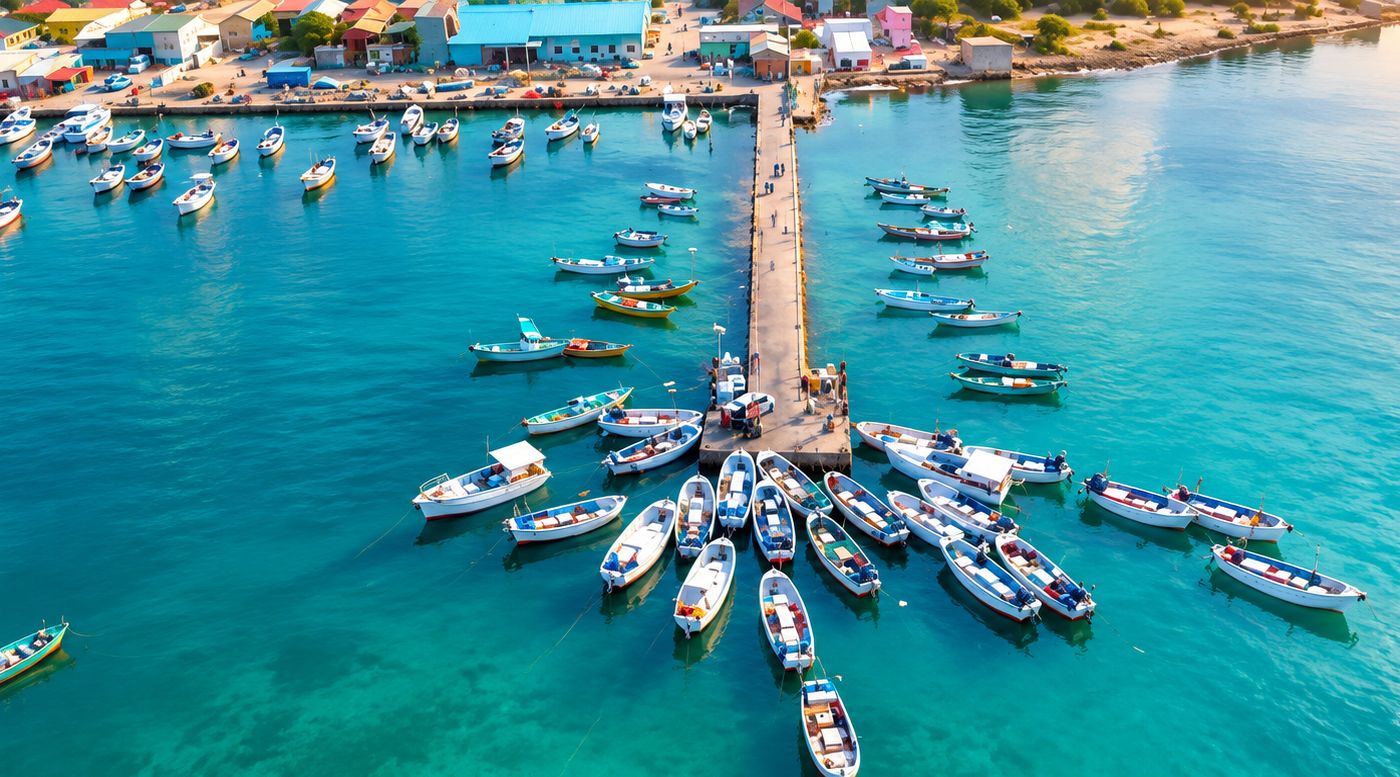
Along the Gulf of Aden, Somaliland's coastline has sustained fishing communities for generations. From small landing sites and artisanal fleets to cooperatives, traders and processors, the fisheries sector remains a living tradition, one that feeds households, generates income, and connects coastal life to the wider blue economy. That same coastline holds significant untapped potential for food security, employment, exports and private-sector growth.
Behind every catch landed and every boat that returns to shore lies a simple, often overlooked need: reliable information. For decades, fisheries data in Somaliland has been scattered, recorded on paper, buried in spreadsheets, or lost when a project ends. Without a shared system to capture this knowledge, the true story of Somaliland's fisheries, its trends, its challenges, its opportunities, has remained incomplete.
The Somaliland Fisheries Data Management System provides a centralized platform for collecting, managing, verifying, analyzing, and reporting fisheries landing and catch data.


Latest news
HARGEISA, Somaliland | 15 September; a major step toward modernizing fisheries governance, the Ministry of Fisheries and Marine Resources, in collaboration with the Horn Environmental and Fisheries Organization (HEFO), has officially unveiled the Somaliland Fisheries Data Management System (FDMS).
Click here to read moreMinister

H.E. Ali Jama Bureed
Minister of Fisheries and Marine Resources
Bismillahi Rahmani Rahim,
Somaliland stands at a historic crossroads. With an expansive 850-KM coastline anchoring the strategic Gulf of Aden, our marine resources represent one of our greatest untapped pillars for economic independence and food security. However, in the 21st century, sovereignty and resource governance are no longer maintained solely by physical presence, they are asserted through digital intelligence and data supremacy.
It is with this vision that I proudly announce the official deployment of the Somaliland Fisheries Data Management System (FDMS).For too long, our fisheries sector operated under the veil of information scarcity. The absence of centralized data limited our ability to quantify our ocean's wealth, accurately measure catch outputs, or provide our artisanal fishers with the structural backing they deserve. We are shifting from reactive management to a proactive, evidence-based strategy that puts data at the center of national policy.
The FDMS serves as the digital anchor for Somaliland’s Blue Economy, driving critical impact across three major pillars:
1. Sovereignty and Maritime Security: By standardizing digital vessel registration, real-time licensing, and trackable catch reporting, this system draws a clear line in our waters. It empowers us to defend our maritime territory and protect our artisanal communities from the structural threats of Illegal, Unreported, and Unregulated (IUU) fishing.
2. Global Market Integration: Modern international markets demand traceability. Through the FDMS, Somaliland's seafood products will carry verifiable data footprints, verifying species legality, sustainability, and quality standards. This builds the precise regulatory trust required to accelerate trade and secure high-value international export pipelines.
3. Investment and Scientific Stewardship: True conservation cannot happen blindly. This system allows us to monitor fish stocks accurately, prevent overexploitation, and confidently partner with local cooperatives and global investors to build landing and cold-chain infrastructures.This milestone represents the collective resolve of the Ministry, our coastal communities, and our international partners.
As we transition to this digital era, I call upon all commercial fishing firms, local cooperatives, and artisanal fishers to embrace transparency, register their inputs, and defend the integrity of this platform.Data is our map, sustainability is our compass, and a prosperous, secure maritime future is our destination.
Guul iyo Gobanimo.
H.E. Ali Jama Bureed | Minister of Fisheries and Marine Resources
Weekly fisheries trends
A snapshot of verified fisheries activity recorded across landing sites this week.
Week covered:
No verified fisheries activity has been recorded for this week yet
Figures appear here as landings recorded at the sites are verified by Ministry officers. The week runs 9 Nov – 15 Nov 2026.
Capabilities
What the system does, from the landing site to the report.
Digital collection of vessel, landing, species, catch, gear, GPS, and field information.
Field data is collected on the Android application, and records entered with no signal upload themselves when one returns.
Authorized officers review submitted fisheries records and the evidence photographs that came with them.
Catch patterns, species distribution, landing sites and vessel information, read across any period.
Ministry reports generated from verified data, exportable for further work.
One place for fisheries records, held against the Ministry's own registry of sites, species and gear.
The process
From a landing recorded on the shore to a figure in a Ministry report.
An enumerator records the landing at the shore: the vessel, the gear, and every species landed with its photograph.
The record is held on the phone and uploads itself when a connection returns. Nothing waits on signal at the landing site.
A Ministry officer reviews the record and its evidence, and approves it, returns it for correction, or rejects it.
Verified landings feed catch, species, gear and landing-site analysis across any period.
Ministry reports are drawn from verified records and exported for planning and research.
FDMS impact
From scattered records to one national picture of Somaliland's fisheries.
Fisheries data held in project files, spreadsheets and paper records is consolidated into one national system, so the Ministry's figures no longer depend on which copy someone happens to hold.
Lasting capacity inside the Ministry of Fisheries, built through hands-on training and cascaded to regional and district coordinators and to the field enumerators who record each landing.
Policymakers, community leaders and researchers work from a clearer picture of catches, stocks and market trends than fragmented records could ever give them.
Monitoring of commercially important species and the coastal ecosystems that hold them, so the sector's health can be judged over years rather than guessed at.
Governed by a joint Ministry and HEFO management committee, so national priorities are met and accountability for the system stays where it belongs.
Access reliable fisheries information to support monitoring, management, research, and informed decision-making.
Accounts are issued by the Ministry to authorized staff.